How SASE works
SASE keeps project work organized around durable records, so agents can work in separate checkouts and their progress can be followed beyond one chat.
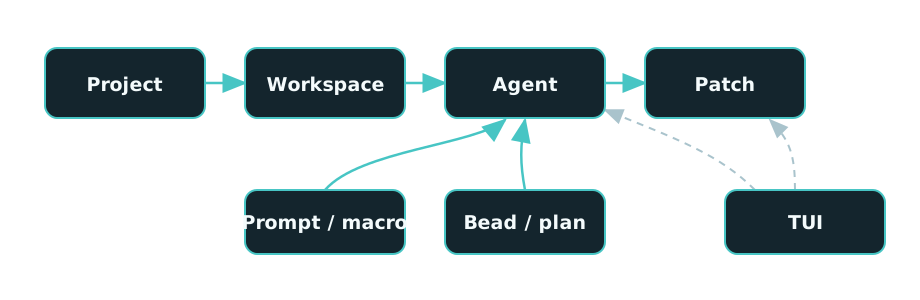
The seven nouns
- Project. A named body of work that gives SASE a repository and shared settings to coordinate.
- Workspace. An isolated checkout where an agent can work without changing another agent's files.
- Agent. A delegated worker that receives instructions, works in a workspace, and leaves results to review.
- Prompt or macro. A prompt describes the work; a macro reuses instructions for work that comes up more than once.
- Patch. A reviewable record that brings a proposed code change and its discussion together.
- Bead or plan. A bead tracks a unit of work; a plan describes an approach and can organize related work.
- TUI. SASE's terminal interface brings work, records, and agent progress into one place.
Where next
- Agents, sessions, and workspaces — how delegated work runs and continues.
- Work units — how outcomes, plans, beads, and review records fit together.
- How changes land — how reviewed work reaches a version-control system.
_[project]: A sase project is a named unit of work registered with SASE. _[workspace]: A sase workspace is a numbered clone of a project's primary repo, managed by the workspace store and tracked in that project's registry.json. _[agent]: A sase agent is an agent session or a single agent that does not belong to a session. _[prompt]: A prompt is the text SASE hands to a provider to start an agent turn. _[macro]: A macro is a reusable prompt triggered with #name in agent prompts. _[Patch]: A Patch is SASE's local unit of change. _[bead]: A bead is one tracked work item in SASE's git-native issue tracker. _[plan]: A plan is a persisted, approved artifact recording the intent behind agent work. _[TUI]: The TUI is SASE's terminal interface for running agents and reviewing results. _[epic]: An epic is an executable multi-phase plan run with sase bead work. _[gate]: A sase gate is a durable, command-backed request for one user decision, created when work must pause for the user. _[monitor]: A sase monitor is a monitor turn that runs one long command under a detached supervisor, so the command outlives the agent that started it. *[stitch]: A stitch is the lightweight ordered change record inside a Patch's STITCHES: section.